Second Avenue Subway: Addendum

Last week, I wrote an entry on the saga of the Second Avenue subway. Since then, there have been several updates. The MTA announced that the Governor will take a ceremonial first ride on New Year's Eve, with the new line opening to the public the following day. So it inches closer to reality.

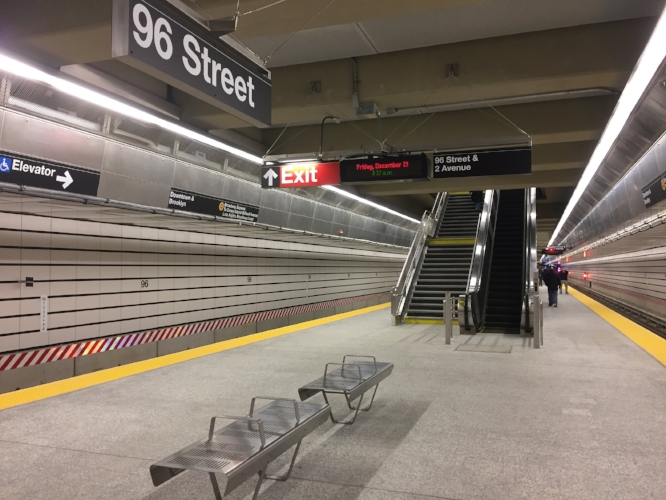
This morning, the MTA gave the public an early preview of the (current) northern terminus of the line, the station at E. 96th St and 2nd Avenue. The station is quite beautiful. What remains to be seen, of course, is whether the state will leave this accomplishment be, or whether they will fulfill their promise to the city to continue building under Second Avenue, and complete all phases of the plan.

Click through the image below to see all my photos from today's open house.

Splendid Structures of New York City

I have no affiliation with this product, but I saw this print of New York's most iconic buildings (illustrated to scale!) and I wanted to share it. Even if you cannot purchase it, if you have trouble telling the second-tier NYC skyscrapers apart, it's worth bookmarking the page to refer back to the image.

(PS: Want to do an New York icon crawl, and try hit as many of these in one tour as possible? That can be arranged.)

The Second Avenue Subway

The saga of New York's endlessly-delayed Second Avenue subway is so infamous, the TV series "Mad Men" (which took place during the 1960s) used it as a punchline in one episode. New York viewers laughed. And groaned. Even during the timeline of that series, the line was already overdue... a line going under Second Avenue to replace the old east side elevated lines was first proposed in 1919.

Today, through much of Manhattan, there is only one subway line that runs up the east side. If you've ever ridden the "Lexington lines" (4, 5, or 6 trains), you know that calling them overcrowded is an understatement the size of the Chrysler Building.

The Second Avenue subway went through numerous false-starts.... in 1929, 1932, 1944, 1947, and finally actual construction beginning in the early 1970s. The city's economic crash during that decade put that to an end. In 1981, Gene Russianoff, the city's top transit advocate, referred to the line as "the most famous thing that's never been built in New York City".

The city and its infrastructure has changed so much since that initial construction that a section of tunnel dug under Chinatown can no longer be used (they will eventually dig a new, deeper, tunnel through that neighborhood).

The project continued its existence in infrastructure purgatory, until a decade ago, when all the elements aligned (political will + actual funding, etc) and construction resumed. It coincided with the start of numerous hugely ambitious NYC projects... Hudson Yards, Brooklyn Bridge Park, the new World Trade Center, and much more. The city is currently building at a rate not seen in over half a century.

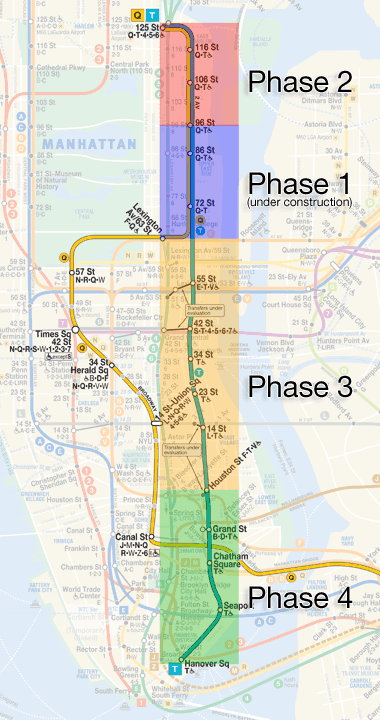
The decision was made to do the work over 4 distinct phases. The first 2 phases would simply see a re-routing of the Q line up the Upper East Side, to Harlem. The final two phases would bring it all down to a southern terminus, in the Financial District. A new color (teal) and line designation (T) were decided on for the new (eventual) line.

This may or may not happen before you die.

This may or may not happen before you die.

Construction began on Phase 1 (the Q re-route) in 2007, with construction currently wrapping up at a furious pace this month. The MTA insists the first phase will open for service before the ball drops in Times Square on New Year's Eve. Total cost so far: $4.4 billion.

Here's a look at how the new subway maps will look like with this completed:

image.png

And yet, that is just one phase down, three to go. Funding for Phase 2 (bringing the Q up to a connection with the 4/5/6 at 125th St) has yet to be approved by the state, and construction is not expected to begin until 2020 (or later?). 

But still after nearly a century, New York is finally getting a subway under Second Avenue. Even if just a few stops for now. Are New Yorkers happy? Or pessimistic? Probably somewhere in between. Ask most people in the city about the Second Avenue subway, and you'll get the same answer: "I'll believe it when I see it."

And maybe soon, seeing will be believing.

The Longest Running Show Underground

My recent post about 'old-school' New York had me reminiscing about one of my favorite old Sesame Street segments... from back when the show more explicitly echoed its New York home. This one was about the subway,  "the longest-running show underground":

Sesame Street, by the way, still films here in New York City, and always has. Its home since 1993 has been Queens' own Kaufman Astoria Studios. The nearby Museum of the Moving Image will also soon be home to a permanent exhibition dedicated to works of Jim Henson.

Is It Safe?

I recently had the following exchange with a customer during a tour in Manhattan:

Guest: "So where do you live?"
Me: "Brooklyn."
Guest: "I was told not to go there."
Me {*confused*}: "Where?"
Guest: "Brooklyn."
Me: "Where in Brooklyn?"
Guest: "All of it."

I have exchanges like this from time, usually from first-time visitors, concerned about their safety in New York City. This a very valid question. And I always reassure a client that a) yes, it is very safe, but also b) exercise basic street smarts anyway (don't carry your wallet in your back pocket, be aware of surroundings, just ignore street solicitors or hawkers, don't buy anything from a guy on the street who doesn't have a valid street vendor license, etc).

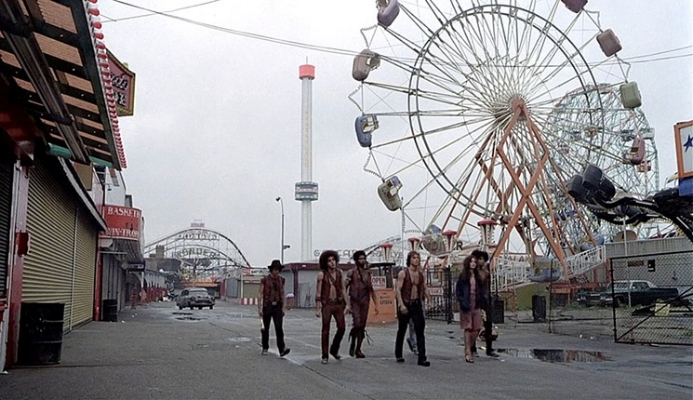
For many who've never been to NYC before, the city's image & reputation was cemented, then frozen in time, by movies of the '70s and '80s like "Midnight Cowboy", "Taxi Driver", or "Serpico" that depicted the Big Apple as a grimey, crime-ridden hellhole. Not to mention movies like "Escape from New York" or the original "Planet of the Apes" series that literally depicted the city as dystopian wastelands. But that is long past. Today, in Coney Island, you will encounter chain restaurants, shiny new amusement parks, and rising tourism... not the world of "The Warriors".

Of course, in those two decades, while people were continuing to live here and thrive and raise families, New York City was its lowest point in terms of crime and economic health. This was an era of 'white flight' from major cities. Things were so bleak that, in 1975, the city nearly went bankrupt. This saga was immortalized in the most iconic NY Daily News cover ever. You usually can tell easily in some neighborhoods who the oldest residents are by who has bars on their windows.

But the New York City of today is a reversal in almost every way from that era.

Today, New York City is seeing so many people coming in (not fleeing out), most of them wealthier than average, that keeping the city a place where the working class can even afford to remain is the #1 political issue. The city is awash with people, wealth, greenery... and it's also the cleanest it has ever been. New parks and skyscrapers are cropping up like daffodils in the Spring. Some people now are even so turned off by these changes, that they romanticize the past era of New York City (aided by hauntingly beautiful photo essays of its gritty past).

And crime? Despite the rhetoric we often hear (and people's memories of the past), crime in America as a whole, and NYC in particular, are at all-time record lows... and dropping. As a tour guide who cares for the safety of my visitors, I would never recommend any neighborhood that I worried would not be safe for them. And I can only count on one hand the number of neighborhoods I would, today, decline to recommend for that reason.

Boroughs like the Bronx and Brooklyn have so much to offer visitors to the city, even first-timers... historical homes and museums, botanical gardens, zoos, parks, sports, and much more (including the real Little Italy). Go forth and discover them! Today, Brooklyn, as a borough and a brand, is so popular that it is a top baby name.

And yes, they are very safe.

When they are opening up Brooklyn-themed bars in Paris, you know you have nothing to fear.


Want to see for yourself? I would love to show what you've been missing.

Instagramming NYC

Instagram just released some interesting stats, including that New York is the most Instagrammed city in the world (not shocking). But inside NYC, what are the most photographed spots on the social network? Most of the answers were not surprising... key sights like Central Park, Times Square, the best museums... though Madison Square Garden was a semi-surprising inclusion.

What are my favorite spots in the city to photograph (other than those on Instagram's list)? Well, of course, I love Bushwick in Brooklyn for its neighborhood-wide gallery of ever-changing street art. I also think Brooklyn Bridge Park & DUMBO have some amazing architecture and some of the best views of Manhattan. And, while less visited than its western counterpart, Midtown East has the most photographic icons of New York for my tastes... Grand Central Terminal, the Chrysler Building (their lobby is an art-deco masterpiece), the New York Public Library main branch, lobbies of the Ford Foundation and the Daily News building, and more.

Interested in photographing New York... not only the biggest sights, but the city's most photogenic secret spots? I'd love to help plan a custom photography walking tour! Don't hesitate to contact me... I'm only a click (bad pun!) away.

A Tour Grows In Brooklyn

I was recently contacted by a former resident of Bensonhurst in Brooklyn who was visiting town and wanted a custom walking tour of his old neighborhood. I love planning these custom tours, and it's always great to see parts of the city that are oft-missed by visitors. The tour was a great success.

Bensonhurst dates back to 1652, when it was originally part of the independent Dutch settlement of New Utrecht (the name "Bensonhurst" didn't come to the area until the late 1800s). There remains a very old reformed church in the neighborhood, and a Dutch cemetery dating back to 1654.

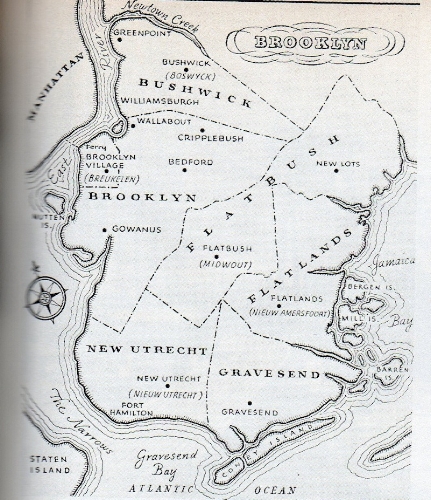
Before Brooklyn consolidated (and then became part of New York City in 1898), it consisted of 6 independent towns... Bushwick, Brooklyn, Flatbush, Flatlands, Gravesend, and New Utrecht. Since many early colonial buildings in downtown Manhattan were (regrettably) destroyed, most of NYC's oldest buildings are Dutch structures from this era... including the city's oldest home (the Pieter Claesen Wyckoff House, in East Flatbush), and its oldest cemetery (Gravesend Cemetery).

In recent history, the neighborhood has been one of the most quintessentially "Brooklyn" neighborhoods in the borough. In the early 20th century, after the subway system developed, connecting the city more easily, it became home to Italian and Jewish immigrants fleeing the overcrowded Lower East Side tenements. Many of the Jewish families left after WWII, leaving the neighborhood for some time as the 'Little Italy' of Brooklyn. More recently, an influx of Chinese residents has turned parts of the area into the city's largest Chinatown. More and more diverse groups of people are moving in every year.

The unique character of the neighborhood was cemented in popular culture. Famous TV shows like "The Honeymooners" and "Welcome Back Kotter" were set here. Movies like "The French Connection" and "Saturday Night Fever" filmed iconic sequences along the main 86th Street drag.

(Lenny's Pizza is still operating today in the same spot!)

(Lenny's Pizza is still operating today in the same spot!)

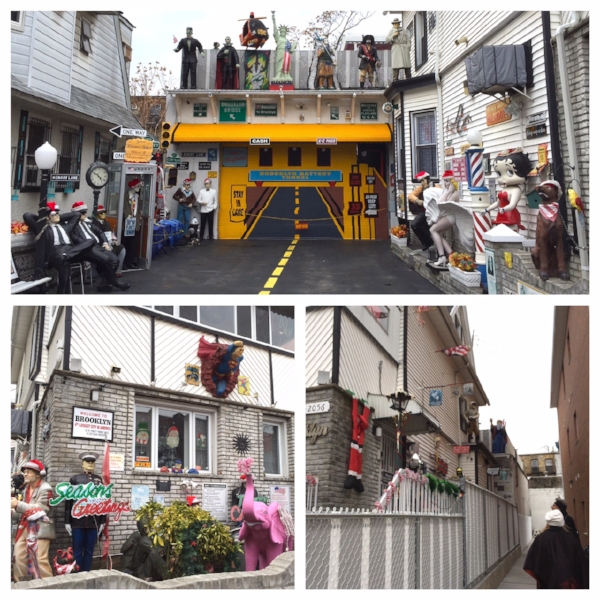
But one of my favorite things to show off in any neighborhood is the more hidden, eclectic treasures. Every neighborhood has them. The best such sight in Bensonhurst is on an otherwise unassuming residential street (85th St)... Steve Campanella's "statue house". This homeowner has filled his property with more kitsch than your eye can handle.  If you find yourself in Bensonhurst, definitely find your way to snap some pictures.

(And definitely find your way up 18th Ave for some of the best Italian baked goods in New York.)

If you are interesting in seeing Bensonhurst for yourself (or any of the surrounding areas... Coney Island, Dyker Heights, Gravesend) or are just curious about my custom tour options, please contact me! I would love to help you discover some hidden NYC treasures of your own.

GANYC Spotlight!

I, along with many of NYC's best tour guides, am a member of the Guides Association of New York City (GANYC)... one of the oldest and most active tour guides associations in America. It is a wonderful organization that works to help the public find the best guides, services, and tours to make sure their time in NYC is as memorable as possible.

I was recently featured on their blog as a spotlighted guide!

This is a great honor and I am proud to be part of a large family of great NYC guides. You can read the spotlight/interview on GANYC's website.

The Landmarks of Midtown

I've added another new walking tour!

This is a great 2.5-hour walking tour of the landmarks of midtown Manhattan. From the Empire State Building to Grand Central to Chrysler Building to Rockefeller Center (and more!), this tour will get you up close and personal with these historic sites, while I share the secrets and history of each. See the insides of Art Deco skyscraper masterpieces, and countless photo opportunities. A great tour for those who want to get the most out of their time in midtown.

The tour can be booked here.

'Tis (Almost) The Season!

I've added a new, seasonal tour to my listings on Viator.

This is a great & festive walking tour from Columbus Circle down to Macy's in Herald Square. Along the way, the tour will pass the numerous window displays & decorations down 5th avenue, visit St. Patrick's Cathedral & Rockefeller Center, and see many outdoor holiday markets. This is going to be a fun tour that I am excited to share with you.

Starts next week for one month.

It can be booked here.

Queens: The World's Borough

My newest tour is my 2.5-hour walking tour of Flushing Meadows-Corona Park, in Queens. I grew up in Queens, and I would love to show visitors (or locals) what they are missing here.

Today, the park contains the USTA Billie Jean King National Tennis Center (current venue for the US Open); Citi Field (home of the NY Mets), the New York Hall of Science; the Queens Museum of Art; the Queens Theatre in the Park; the Queens Zoo; and the New York State Pavilion.

Besides all of that, and in addition to being larger in acreage than Central Park, Flushing Meadows' history reshaped Queens and New York as a whole. It was created for the 1939 World's Fair by infamous 20th century urban planner Robert Moses. The roadways that today connect Queens (and NYC in general) to Long Island were largely shaped by this project. One building from that Fair later became the first home of the United Nations, and still stands today. The park also housed the more famous 1964 World's Fair, many of the icons of which remain to this day, including the Unisphere.

The 1964 World's Fair took place in the mid-point of a tumultuous decade that was filled early on with discovery, optimism, and vision for the future. Its skyway attraction took visitors over countless pavilions, including those for General Motors, IBM, Westinghouse Pavilion, Dinoland, the Ford Motor Company, and countries from around the world. Walt Disney himself helped create numerous attractions for the fair that eventually made their way into his parks, including It's A Small World, the Carousel of Progress, and Great Moments with Mr. Lincoln. It is this Fair that gave Disney the vision for a project that later become the Epcot theme park in Florida.

What's still there from the Fair(s) and what is only there in memory and legacy? This is one of the key things we explore in this tour. I believe this is a fun & easy tour for visitors of all ages.

Interested? Contact me for a custom date around your schedule.

Victorian Flatbush

Introducing my 2-hour walking tour of Victorian Flatbush, Brooklyn.

The main feedback I get from this tour is "wow, who knew there was so much history here?". And that's fair... when we think of the history of NYC, we think of downtown Manhattan. But when the Dutch founded New Netherlands ("New Amsterdam" was just what they called the specific settlement in present-day Financial District), many of the earliest settlements were in Brooklyn. Brooklyn was once an independent city divided into 6 separate towns... including Flatbush. And the subsection of this area called Victorian Flatbush is the most gorgeous and history-filled of them all.

In just this neighborhood-- which consists of numerous, small historic districts-- you can see NYC's oldest high school (founded by Alexander Hamilton, Aaron Burr and others... and attended in more modern times by Barbra Streisand, Neil Diamond, and more), a Dutch church grounds dating back to 1654, historic palace theatres and landmarked buildings, a private tennis club tucked away behind pre-war apartment buildings, and countless Victorian-style homes dating back to the turn of the 20th century. It is a slice of high-end suburbia tucked away in a busy Brooklyn community.

I think of this tour as as a two-in-one: It is both a journey back in time to old Brooklyn, and also a relaxing exploration of some of the most beautiful NYC architecture outside of Manhattan. So what are you waiting for? Contact me to arrange a custom date around your schedule.